
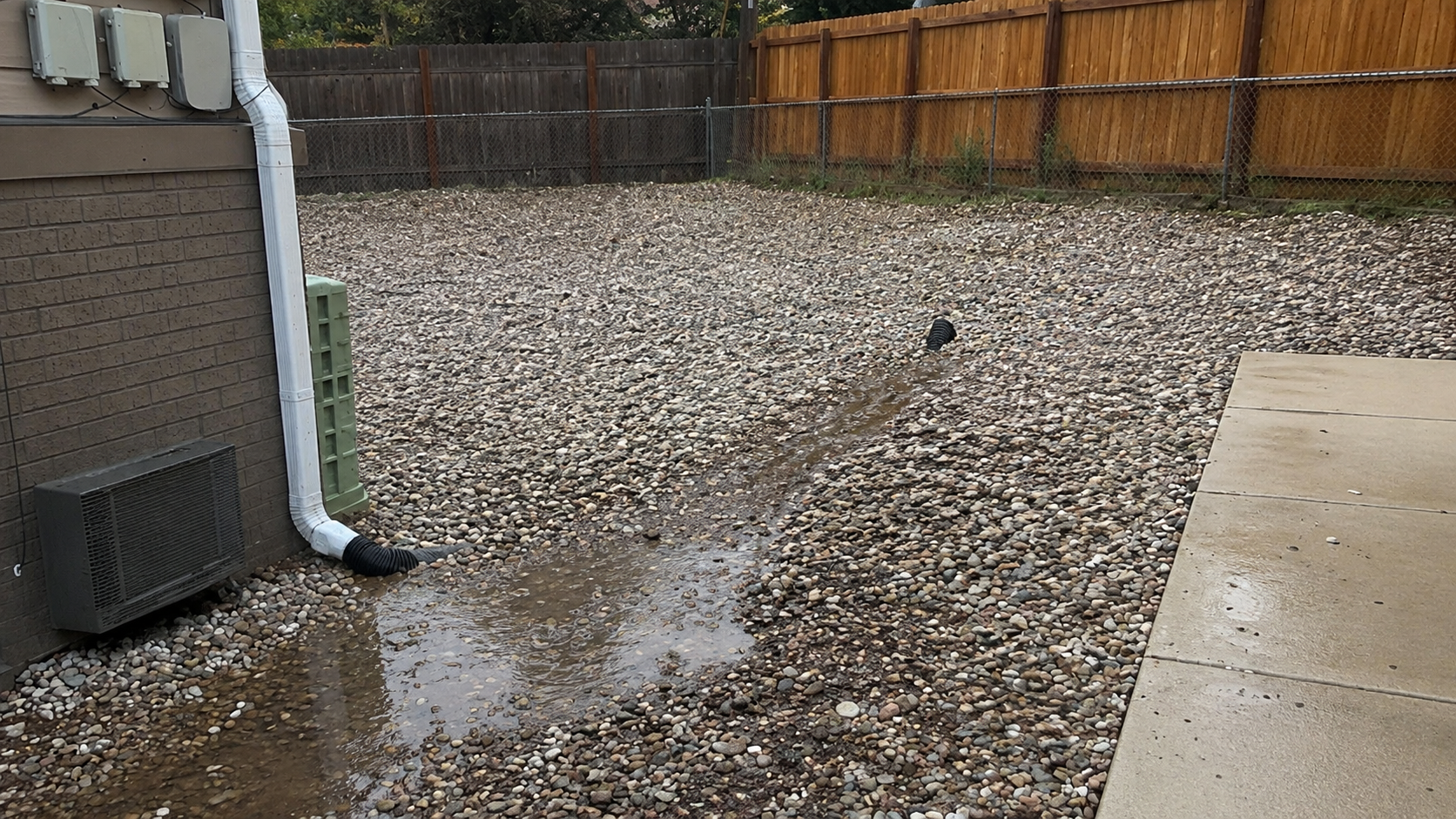
Drainage problems are often treated as a construction issue, but for HOA communities, multifamily properties, and commercial sites, some of the earliest warning signs show up in the landscape.
Standing water, washed-out rock, thinning turf, exposed soil, damaged mulch beds, erosion along sidewalks, and chronically wet areas can all indicate that water is not moving through the property as intended.
Addressing these conditions early can help protect both the appearance of the property and the long-term value of the asset.
Small Drainage Problems Can Become Expensive
A relatively minor drainage issue can gradually affect several areas of a property.
Water moving across the landscape instead of through an appropriate drainage path can cause:
- Soil erosion and loss of established grade
- Mulch and decorative rock displacement
- Turf and plant damage
- Sediment accumulation on sidewalks and parking areas
- Washouts around retaining walls
- Exposed or damaged irrigation components
- Ice accumulation during Colorado freeze-thaw cycles
- Repeated landscape repair costs
One of the most common mistakes is repeatedly repairing the visible damage without correcting the underlying cause.
If decorative rock has to be replaced every year because it continues washing onto a sidewalk, replacing the rock is not solving the problem. The movement of water needs to be evaluated.
Irrigation May Be Contributing to the Problem
Not every drainage issue is caused by heavy rain or snowmelt.
Broken irrigation lines, improperly adjusted sprinkler heads, excessive run times, poor coverage, and irrigation on slopes can contribute to erosion and oversaturated soil.
This is why routine irrigation inspections are especially important on large commercial and community properties.
A chronically wet area may be caused by grading, irrigation, drainage, or a combination of all three. Identifying the source before completing repairs can prevent unnecessary spending and repeated failures.
Slopes Require Additional Attention
Many Colorado properties include slopes, detention areas, native areas, retaining walls, and significant elevation changes.
When vegetation becomes thin on a slope, there may no longer be enough root structure to stabilize the soil. Heavy rainfall can then create erosion channels that become progressively worse with each storm.
Depending on the site, solutions may include:
- Native seed establishment
- Erosion-control blankets
- Drainage improvements
- Strategic rock installation
- Grading corrections
- Additional plant material
- Stabilization of concentrated water-flow areas
The right solution depends on where the water is coming from and how it is moving through the property.
Include Drainage in Routine Property Inspections
Property managers and HOA boards should not have to wait until major erosion occurs before taking action.
Routine landscape inspections should look for:
- New erosion channels
- Standing water
- Soil collecting on sidewalks
- Washed-out rock or mulch
- Exposed irrigation components
- Turf that remains unusually wet
- Downspouts discharging into vulnerable landscape areas
- Deterioration around retaining walls
- Landscape areas requiring the same repairs repeatedly
Photographic documentation can also help determine whether a condition is stable or becoming progressively worse over time.
Landscape Management Is Asset Management
Commercial landscaping should do more than keep a property looking good.
For HOA boards, multifamily operators, and commercial property managers, the landscape is part of the property’s overall infrastructure. Conditions that appear cosmetic today can become capital expenses later.
A drainage issue caught early may require relatively minor grading, erosion control, or irrigation adjustments. That same condition left unattended can eventually require significant reconstruction.
Proactive landscape management helps property owners identify those risks earlier, prioritize spending, and protect previous landscape investments.
Elevate Landscapes Can Help Identify Problems Early
Elevate Landscapes works with HOA communities, multifamily properties, and commercial sites throughout the Colorado Springs area to identify landscape concerns before they become larger and more expensive problems.
Our team evaluates drainage-related landscape damage, erosion, irrigation concerns, declining plant material, and recurring problem areas and develops practical recommendations based on the needs of the property.
If your property has areas of standing water, recurring washouts, erosion, or landscape areas that continually require repair, it may be time to look beyond the symptom and identify the source.
Elevate Landscapes helps protect the appearance of your property while protecting the asset behind it.
