
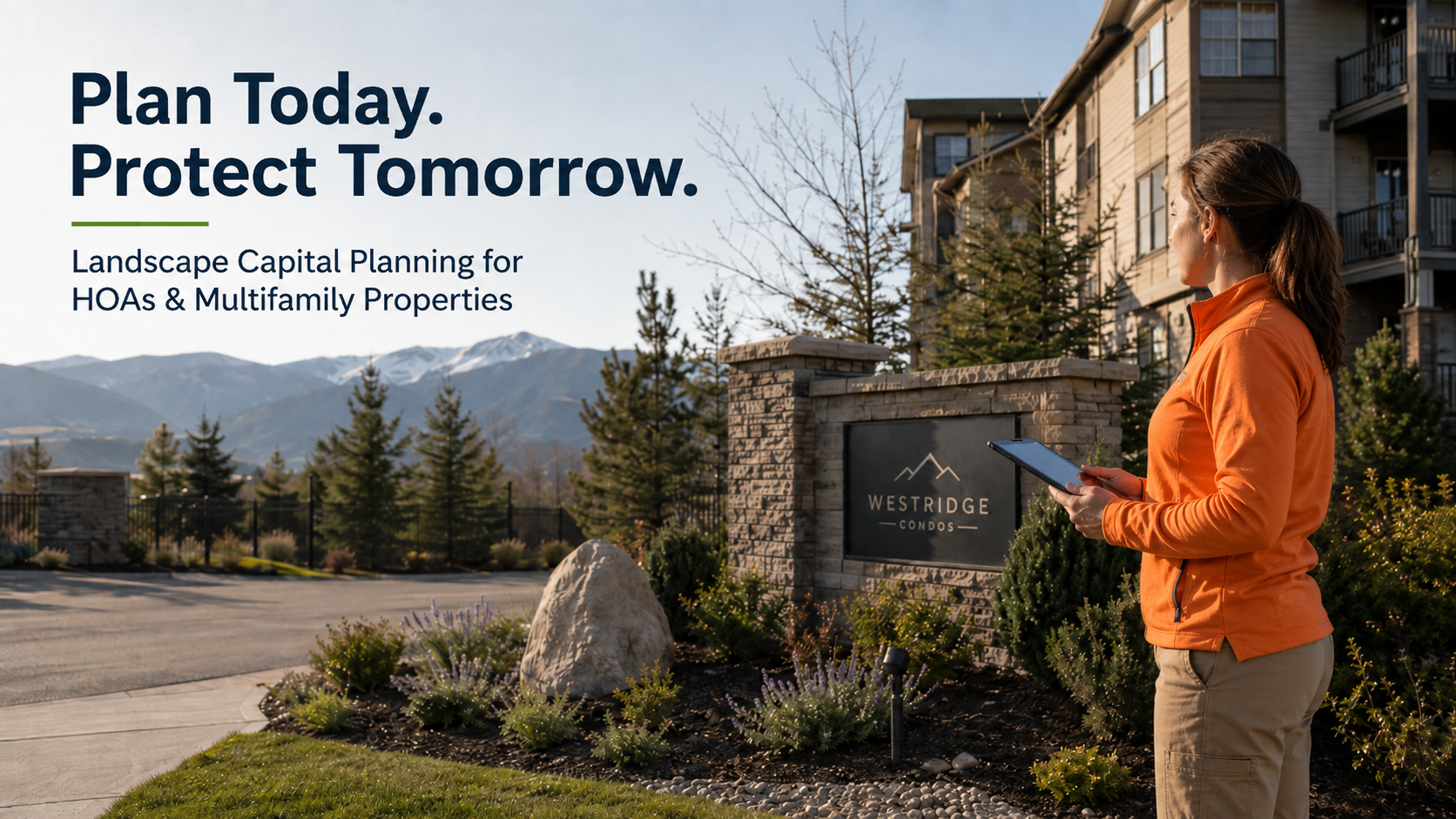
Most commercial landscapes do not fail overnight.
Trees decline gradually. Shrubs become oversized or woody. Irrigation components age. Rock migrates and thins. Edging deteriorates. Turf struggles in areas where conditions have changed. Then, eventually, something reaches the point where it can no longer be handled through routine maintenance.
That is when an otherwise predictable landscape expense suddenly becomes an emergency.
For HOA boards, apartment communities, and commercial property managers, one of the best ways to control landscape costs is to stop looking at landscaping strictly as an annual maintenance expense and start incorporating it into long-term capital planning.
Maintenance and Replacement Are Two Different Expenses
Your landscape maintenance contract is designed to maintain the assets already installed on the property.
Mowing, pruning, weed control, irrigation inspections, seasonal cleanup, and general horticultural care can extend the life of a landscape, but they cannot make every component last forever.
Eventually, properties will need to plan for projects such as:
- Tree removal and replacement
- Shrub bed renovation
- Irrigation system upgrades
- Controller and valve replacement
- Conversion of struggling turf areas
- Rock or mulch replenishment
- Drainage improvements
- Erosion control
- Aging retaining walls or edging
- Renovation of high-visibility entrances and common areas
When these projects are not anticipated, managers are often forced to find thousands of dollars unexpectedly.
Your Landscape Should Have a Replacement Forecast
Property managers are accustomed to reserve planning for roofs, asphalt, paint, siding, mechanical equipment, and other major building components.
Landscaping deserves similar consideration.
A mature property may have hundreds of trees, thousands of shrubs, miles of irrigation piping, multiple controllers, and acres of turf and planting beds. Collectively, those assets represent a significant investment.
A proactive landscape assessment can help identify which areas are performing well, which are beginning to decline, and which are likely to require investment over the next several years.
Instead of discovering that 25 shrubs need replacement this year, for example, a property may be able to identify declining plant material early and phase improvements over several budget cycles.
Prioritize the Areas Residents and Prospects See First
Not every landscape problem requires immediate replacement.
A good capital plan prioritizes improvements based on factors such as safety, asset protection, water use, appearance, and visibility.
For many communities, that means focusing first on:
Property entrances. Your entrance establishes the first impression of the entire community.
Leasing offices and clubhouses. These spaces directly influence prospective residents and current resident perception.
Monument signs. Overgrown or declining landscaping around signage can make an otherwise well-maintained property look neglected.
High-traffic common areas. Residents notice these areas every day.
Areas causing property damage. Drainage problems, erosion, failing irrigation, and improperly located trees can eventually affect much more than the landscape.
Once priority areas are identified, less urgent improvements can be scheduled over future budget years.
Phasing Improvements Can Produce Better Results
One of the biggest advantages of planning ahead is that landscape improvements do not necessarily have to happen all at once.
A community may decide to renovate entrances this year, address failing turf next year, and replace aging shrub beds the following year.
This approach allows ownership and management teams to control spending while still making measurable improvements to the property each season.
It also prevents the frustrating cycle of repeatedly spending small amounts of money repairing areas that ultimately need to be redesigned or replaced.
The Cheapest Option Is Not Always the Lowest-Cost Option
Landscape budgeting should also consider long-term operating costs.
Replacing a struggling plant with the same plant in the same location may be inexpensive today, but if the environmental conditions are wrong, the property may be paying for another replacement several years later.
The better question is:
Why did this area fail, and what should be installed here instead?
Sun exposure, irrigation coverage, soil conditions, drainage, snow storage, pedestrian traffic, mature plant size, and maintenance requirements should all influence replacement decisions.
Sometimes the right investment is not simply replacing what was there. It is redesigning the area so the same problem does not keep returning.
Start Planning Before Budget Season
The best time to identify next year’s landscape projects is not when next year’s budget is already due.
Property walks performed during the growing season give managers, board members, and landscape professionals the opportunity to evaluate plant health, irrigation performance, turf condition, drainage, and overall property appearance while problems are visible.
From there, projects can be categorized into immediate needs, near-term improvements, and longer-term capital projects.
That gives decision-makers something far more valuable than another list of proposals.
It gives them a plan.
Elevate Landscapes Can Help You Build One
At Elevate Landscapes, we believe commercial landscaping should be managed as an asset, not simply maintained as an expense.
Our team works with multifamily communities, HOAs, and commercial properties throughout the Colorado Springs area to identify landscape deficiencies, prioritize improvements, develop realistic scopes of work, and help clients plan improvements around their budgets.
If you are beginning your next budgeting cycle, now is a good time to walk your property and identify what the landscape will need next — not just what it needs today.
Elevate Landscapes
Protecting your landscape investment while planning for what comes next.
