
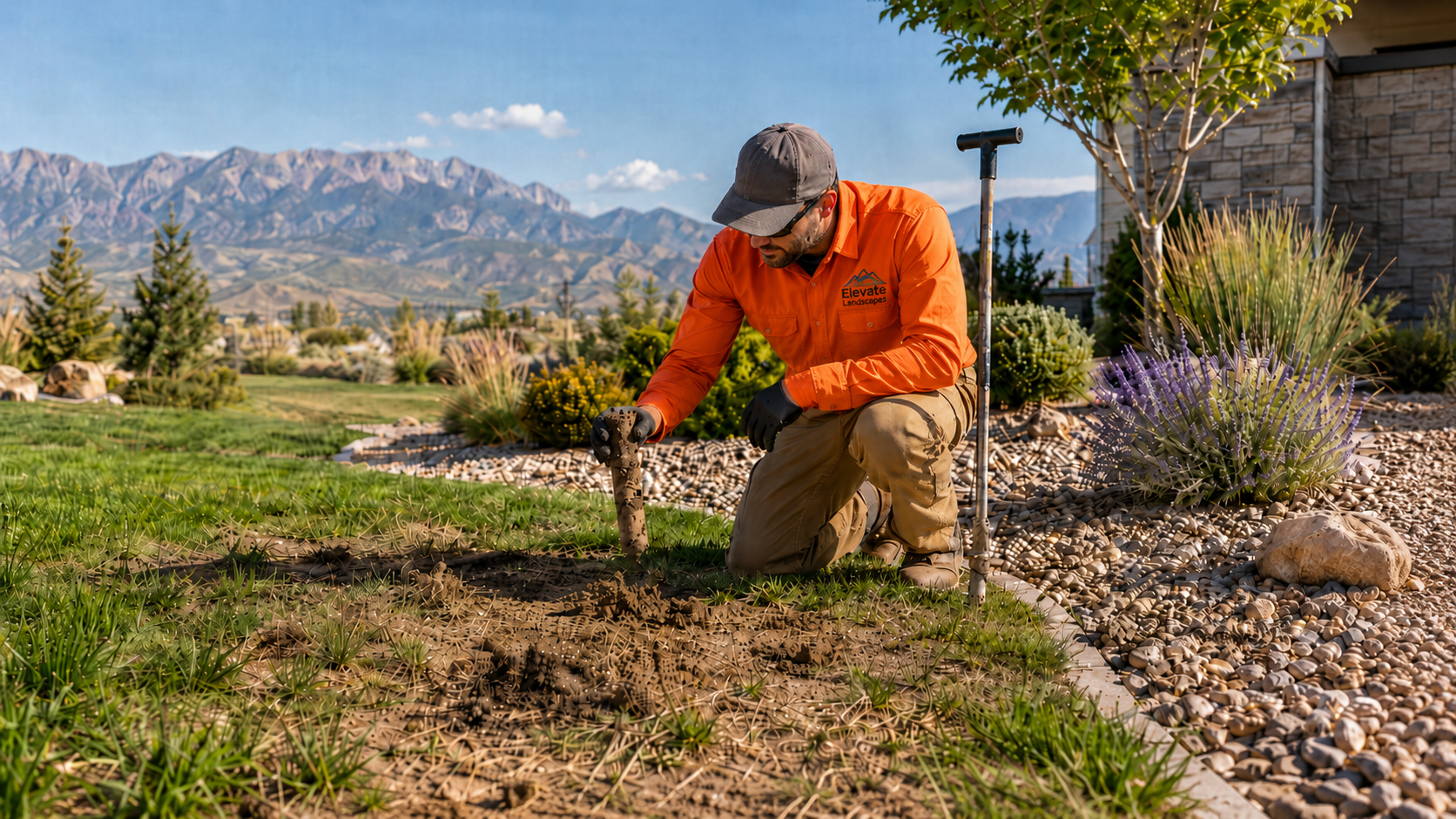
In Colorado landscaping, it is easy to focus on what we can see: thinning turf, stressed plants, dry-looking beds, weeds, runoff, or irrigation coverage issues. But some of the most expensive landscape problems start below the surface.
One of the most overlooked issues in Colorado landscapes is compacted soil.
This is especially common along the Front Range, where many communities are built on heavy clay soils. Add construction traffic, foot traffic, snow operations, mowing equipment, poor drainage, and years of irrigation cycles, and the soil can become dense enough that water, air, and roots cannot move through it properly.
When that happens, even a well-designed landscape can struggle.
Why Colorado Soil Can Be Difficult
Many Colorado properties have clay-heavy soils. Clay is not automatically bad. In fact, clay soil can hold nutrients and moisture well. The problem is that clay also compacts easily.
Once compacted, the soil becomes tight and heavy. Water may run off the surface instead of soaking in. In other areas, water may sit too long below the surface, leaving plant roots without enough oxygen. That creates a frustrating situation where a landscape can appear dry, stressed, and overwatered all at the same time.
This is one reason irrigation adjustments alone do not always solve plant health problems.
If the soil cannot accept water properly, adding more water may only create more runoff, shallow roots, fungal pressure, or root decline.
Signs of Compacted Soil
Compacted soil is not always obvious at first glance, but there are several common warning signs:
- Water pooling or running off instead of soaking in
- Turf that thins out even with regular watering
- Plants that fail to establish after installation
- Shrubs with small leaves, poor color, or limited new growth
- Hard, cracked soil surfaces
- Weeds thriving where turf is struggling
- Irrigation water collecting in low areas
- Mulch or rock beds that look dry on top but stay wet underneath
For HOAs and commercial properties, compacted soil often shows up near sidewalks, parking areas, dog stations, mailbox clusters, entry monuments, playgrounds, and high-traffic turf areas.
These are places where people, pets, equipment, and construction activity repeatedly press down on the same soil.
Why New Plants Sometimes Fail
When plants decline shortly after installation, the first assumption is often that they were not watered enough. Sometimes that is true. But in Colorado, soil conditions are just as important as irrigation.
A plant needs water, but it also needs oxygen around its roots. In compacted clay soil, the planting area may hold too much water while still preventing healthy root expansion. Roots stay shallow, weak, and stressed.
That makes plants more vulnerable to heat, drought, winter damage, insects, disease, and transplant shock.
In other words, the issue may not be the plant itself. The issue may be the soil environment the plant was installed into.
Rock Mulch Does Not Fix Bad Soil
Rock mulch is extremely common in Colorado landscapes, especially in water-wise designs. It can be attractive, durable, and lower maintenance than traditional turf areas.
However, rock mulch does not correct compacted soil.
If a property removes turf, installs weed fabric, covers the area with rock, and adds plants without properly preparing the soil, the landscape may look good at first but struggle over time. The same compacted soil is still underneath.
This is why site preparation matters so much in xeriscape and renovation projects.
A successful water-wise landscape is not just about removing grass. It is about creating a healthier growing environment for the plants that remain.
The Role of Organic Matter
One of the best ways to improve compacted soil is by incorporating organic matter into the soil before planting. Compost and other organic amendments can help improve soil structure, water movement, drainage, aeration, and root development.
The key word is incorporating.
Simply placing amendment on top of the soil is not enough for new installation areas. For amendments to improve the root zone, they need to be mixed into the soil at the proper depth. This helps create a better transition between the existing soil and the amended planting area.
For new beds, renovation areas, and plant installations, proper soil preparation can make the difference between plants that survive and plants that actually establish.
Turf Areas Need Soil Care Too
Compaction is not limited to planting beds. Turf areas are often some of the most compacted parts of a property.
High-use lawns, dog areas, narrow turf strips, and common areas can become compacted over time. Once that happens, turf roots struggle to grow deeply. The lawn may require more water, show more heat stress, and become more vulnerable to weeds.
Core aeration can help reduce turf compaction by opening channels for air, water, and nutrients. For many Colorado properties, aeration should be viewed as part of long-term turf health, not just a seasonal add-on.
This is especially important for communities trying to preserve usable turf while reducing water waste.
Why Soil Problems Cost HOAs More Over Time
Compacted soil creates a cycle of repeated spending.
A community may replace dead plants, increase irrigation, treat weeds, reseed turf, or add fertilizer without addressing the underlying issue. Those services may provide temporary improvement, but the same problem returns because the soil still cannot support healthy roots.
Over time, this leads to higher maintenance costs and more frustration for boards, managers, residents, and landscape contractors.
Healthy soil does not eliminate every landscape issue, but it gives plants and turf a much better chance to succeed.
When Soil Preparation Should Be Included
Soil preparation should be considered during:
- Turf-to-xeriscape conversions
- New plant bed installations
- Monument and entryway renovations
- Shrub replacement projects
- Drainage correction work
- High-traffic turf repairs
- Dog area improvements
- Large-scale landscape renovations
- Areas impacted by construction or heavy equipment
Skipping soil preparation may reduce the upfront cost of a project, but it can increase replacement costs later.
A Better Approach to Colorado Landscape Renovations
Before replacing struggling plants or redesigning a landscape, it is worth asking a few important questions:
Is the soil compacted?
Is water soaking in or running off?
Are roots able to grow beyond the original planting hole?
Is the area staying too wet below the surface?
Was the soil amended during installation?
Is this a high-traffic or construction-impacted area?
These questions help determine whether the solution should be irrigation, plant replacement, soil improvement, drainage correction, or a combination of all four.
The Bottom Line
In Colorado, successful landscaping starts below the surface.
Plants need more than irrigation and sunlight. They need soil that allows water, oxygen, and roots to move properly. When soil is compacted, even drought-tolerant plants can struggle.
For HOAs and commercial properties, addressing soil compaction early can help reduce plant loss, improve turf performance, support water-wise landscaping, and protect the community’s landscape investment.
A beautiful Colorado landscape is not built from the top down.
It is built from the soil up.
