
Every summer, we get the same concern from property managers and board members:
“The grass looked fine last week. What happened?”
In many cases, the answer is Ascochyta leaf blight.
Ascochyta is a common turf disease that can make healthy-looking grass turn brown, tan, or straw-colored very quickly. It often looks like the lawn is dying, but the damage is usually worse visually than it is structurally.
The important thing to know is this: Ascochyta typically affects the grass blade, not the crown or root system. That means the lawn often has a good chance of recovery when the right steps are taken.
What Causes Ascochyta?
Ascochyta usually shows up when turf is already under stress.
In Colorado, that stress often comes from:
- Hot, dry weather
- Sudden temperature changes
- Inconsistent irrigation
- Poor sprinkler coverage
- Drought stress
- Mowing during wet conditions
- Dull mower blades
- Compacted soil
- Heavy use from residents, pets, or equipment
This disease is especially common after a stretch of cool, wet weather followed by heat, wind, and dry conditions. The turf gets pushed from one extreme to another, and stressed grass is more vulnerable.
What Does It Look Like?
Ascochyta can be dramatic.
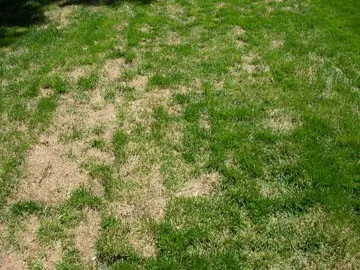
A lawn may appear green and healthy, then within a few days, large areas can look bleached, brown, or dead. The patches are often irregular and may show up more noticeably after mowing.
Common signs include:
- Straw-colored or bleached grass blades
- Irregular brown patches
- Grass that looks drought-stressed even after watering
- Leaf blades that look shredded, pinched, or collapsed
- Damage that appears suddenly
Because it looks similar to drought stress, irrigation problems, or heat damage, it is important to look at the whole site before assuming the cause.
Is the Grass Dead?
Usually, no.
This is where Ascochyta causes the most confusion. The lawn may look terrible from the street, but the plant itself is often still alive.
Because the disease mainly affects the leaf blade, recovery happens as the turf pushes out new growth. That recovery depends on weather, irrigation, mowing practices, and overall turf health.
In other words, this is not usually a “rip it out and start over” situation. It is a “reduce stress and let the turf recover” situation.
How Do You Treat It?
There is no magic overnight fix for Ascochyta.
Fungicides are not usually the first answer because the disease is often tied to environmental stress. The best approach is to correct the conditions that are weakening the turf.
That starts with the basics.
Check the Irrigation
Before assuming a lawn disease is the only issue, irrigation needs to be checked.
Broken heads, clogged nozzles, low pressure, poor coverage, overspray, dry spots, and controller issues can all create stress that makes turf more vulnerable.
A lawn cannot recover well if it is not receiving consistent water.
Mow Correctly
Mowing matters more than people think.
Dull mower blades tear the grass instead of cutting it cleanly. That creates more stress and makes the damage look worse.
During periods of heat or disease pressure, turf should not be scalped. Mowing height should be appropriate for the season, and no more than one-third of the grass blade should be removed at a time.
Wet mowing should also be avoided when possible because it can spread disease and create additional damage.
Reduce Stress Where Possible
Turf that is already struggling does not need more pressure.
Heavy foot traffic, pet traffic, maintenance equipment, and unnecessary mowing can all slow recovery. When turf is stressed, the goal is to give it the best possible conditions to grow out of the damage.
That may include irrigation adjustments, mowing changes, aeration, fertilization, or soil improvement depending on the site.
What Property Managers Should Know
Ascochyta can create a lot of resident complaints because it appears quickly and looks severe.
The most important thing is to avoid jumping to conclusions. Brown turf does not always mean the landscape contractor stopped watering. It also does not always mean the lawn is permanently damaged.
A proper diagnosis should include:
- Irrigation performance
- Weather conditions
- Mowing practices
- Soil conditions
- Recent site activity
- Overall turf health
At Elevate Landscapes, we look at the full picture before making a recommendation. That helps communities avoid unnecessary treatments, wasted water, and reactive decisions that do not solve the real problem.
The Bottom Line
Ascochyta leaf blight can make turf look dead almost overnight, but in most cases, the lawn can recover with proper care.
The best response is not panic. It is proper irrigation, smart mowing, reduced stress, and consistent monitoring.
For HOAs, multifamily communities, and commercial properties, proactive landscape management is what keeps small turf issues from becoming major property concerns.
