
Is Your Irrigation System Smarter Than the Weather? The Benefits of Rain Sensors and Smart Controllers
How modern irrigation technology can reduce water waste, lower utility costs, and protect your landscape investment.
Colorado weather is anything but predictable. One afternoon brings sunshine and 85-degree temperatures, while the next delivers thunderstorms, cooler conditions, and a welcome dose of moisture.
Yet many irrigation systems continue watering on the exact same schedule, regardless of what Mother Nature has planned.
If you’ve ever watched sprinklers running during a rainstorm, you’ve seen firsthand how traditional irrigation controllers can waste water and money.
Fortunately, modern irrigation technology offers a smarter approach. Rain sensors and smart irrigation controllers help landscapes receive the water they need, when they need it, without unnecessary watering.
For homeowners, HOAs, apartment communities, and commercial properties, these relatively simple improvements can make a meaningful difference in water conservation and long-term landscape management.
What Is a Rain Sensor?
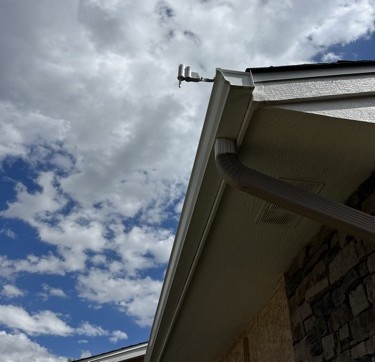
A rain sensor is a device connected to an irrigation controller that temporarily interrupts scheduled watering when sufficient rainfall has occurred.
Instead of allowing sprinklers to run during or shortly after a rainstorm, the sensor signals the controller to pause irrigation until conditions dry out.
Rain sensors are typically inexpensive, require minimal maintenance, and can often be added to existing irrigation systems.
Their benefits include reducing unnecessary watering, helping prevent oversaturated soil, limiting runoff onto sidewalks and roadways, and reducing utility expenses.
However, rain sensors have one important limitation: They respond to rainfall, but they don’t automatically calculate how much water your landscape needs throughout the season.
That’s where smart irrigation controllers come in.
What Makes a Smart Irrigation Controller Different?
Traditional irrigation controllers operate on a fixed schedule. If they’re programmed to water for 20 minutes every Monday, Wednesday, and Friday, that’s what they’ll do until someone changes the settings.
Smart irrigation controllers take a more responsive approach.
Depending on the model and configuration, these controllers can use local weather information, estimated evaporation rates, seasonal temperatures, and landscape characteristics to adjust irrigation schedules automatically.
Some systems also incorporate soil moisture sensors, flow monitoring, and remote management capabilities.
Rather than relying exclusively on a predetermined schedule, a properly configured smart controller can adjust watering to better match actual landscape demand.
For example, a property may need substantial irrigation during a hot, dry July week. But when cooler temperatures and afternoon rainstorms arrive in August, the controller can reduce unnecessary watering without requiring someone to manually reprogram every zone.
How Much Water Can Smart Irrigation Technology Save?
The savings potential may be greater than many property owners realize.
According to the U.S. Environmental Protection Agency’s WaterSense program, replacing a traditional clock-based irrigation controller with a WaterSense-labeled weather-based controller can save an average household nearly 7,600 gallons of water annually.
For larger HOA communities, commercial properties, and multifamily developments, the financial implications can be significant, particularly where multiple irrigation systems serve extensive turf and planting areas.
Actual savings depend on the property’s existing irrigation practices, landscape design, controller programming, and local conditions.
Why This Technology Matters in Colorado
Water management along Colorado’s Front Range presents unique challenges.
Our semi-arid climate, fluctuating temperatures, seasonal drought conditions, and localized thunderstorms make efficient irrigation particularly important.
A storm may deliver significant rainfall to one neighborhood while a nearby property receives almost nothing. Meanwhile, turfgrass, ornamental plantings, trees, and native landscapes may all have different watering requirements.
Smart irrigation technology provides an opportunity to manage these changing conditions more effectively.
For HOAs and commercial property managers, the benefits go beyond water savings.
- Better Budget Management: Reducing unnecessary irrigation can help control operating expenses and make water-related costs more predictable.
- Healthier Landscapes: Appropriate watering supports root development and reduces stress associated with overwatering.
- Improved Oversight: Compatible connected controllers allow property managers and irrigation professionals to review and adjust schedules remotely.
- Greater Accountability: Some systems provide watering histories, alerts, and usage information that support maintenance decisions and help identify potential issues.
- Long-Term Asset Protection: Proper irrigation management helps protect the community’s investment in turf, trees, shrubs, and ornamental landscapes.
Rain Sensor or Smart Controller: Which Is Right for Your Property?
Both technologies have value, but they serve different purposes.
A rain sensor is generally the more economical option and works well for properties with otherwise functional irrigation systems that simply need a way to prevent watering during rainfall.
A smart controller offers a more comprehensive solution. Weather-based models can automatically adjust watering schedules based on changing environmental conditions, while compatible connected systems may provide remote access, monitoring, and additional management features.
For larger properties with multiple irrigation zones, varying plant materials, or extensive common areas, these capabilities can be particularly valuable.
In some cases, combining a smart controller with an on-site rain sensor offers additional protection against unnecessary watering, especially when localized storms are not accurately reflected in regional weather data.
The best solution depends on the property’s existing equipment, irrigation needs, and available budget.
Smart Technology Still Needs Professional Management
One misconception about smart irrigation systems is that installing the technology eliminates the need for regular inspections and adjustments.
It doesn’t.
Even the most advanced controller cannot automatically correct a broken sprinkler head, improperly adjusted nozzle, leaking valve, or poorly designed irrigation zone.
Smart controllers must also be configured with accurate information about plant material, soil conditions, sprinkler application rates, sun exposure, and other property-specific characteristics.
Without proper setup and ongoing maintenance, even sophisticated equipment can operate inefficiently.
Regular irrigation inspections, seasonal adjustments, and timely repairs remain essential to maintaining a healthy and water-efficient landscape.
A Smarter Investment in Your Landscape
As water conservation becomes increasingly important throughout Colorado, irrigation efficiency should be part of every property’s long-term landscape management strategy.
Upgrading irrigation technology doesn’t necessarily require replacing an entire system. In many cases, existing equipment can be improved through the addition of rain sensors, compatible smart controllers, or other water-saving components.
The key is determining which improvements provide the greatest benefit for the property’s specific needs and budget.
At Elevate Landscapes, we believe effective landscape management means more than keeping properties looking their best today. It means protecting landscape assets, managing resources responsibly, and helping property owners make informed decisions for the future.
Whether you’re managing an HOA, multifamily community, commercial property, or residential landscape, evaluating your irrigation technology is a practical step toward smarter water management.
Ready to Make Your Irrigation System Work Smarter?
Contact Elevate Landscapes to discuss your property’s irrigation system and explore opportunities to improve efficiency, reduce water waste, and protect your landscape investment.
