
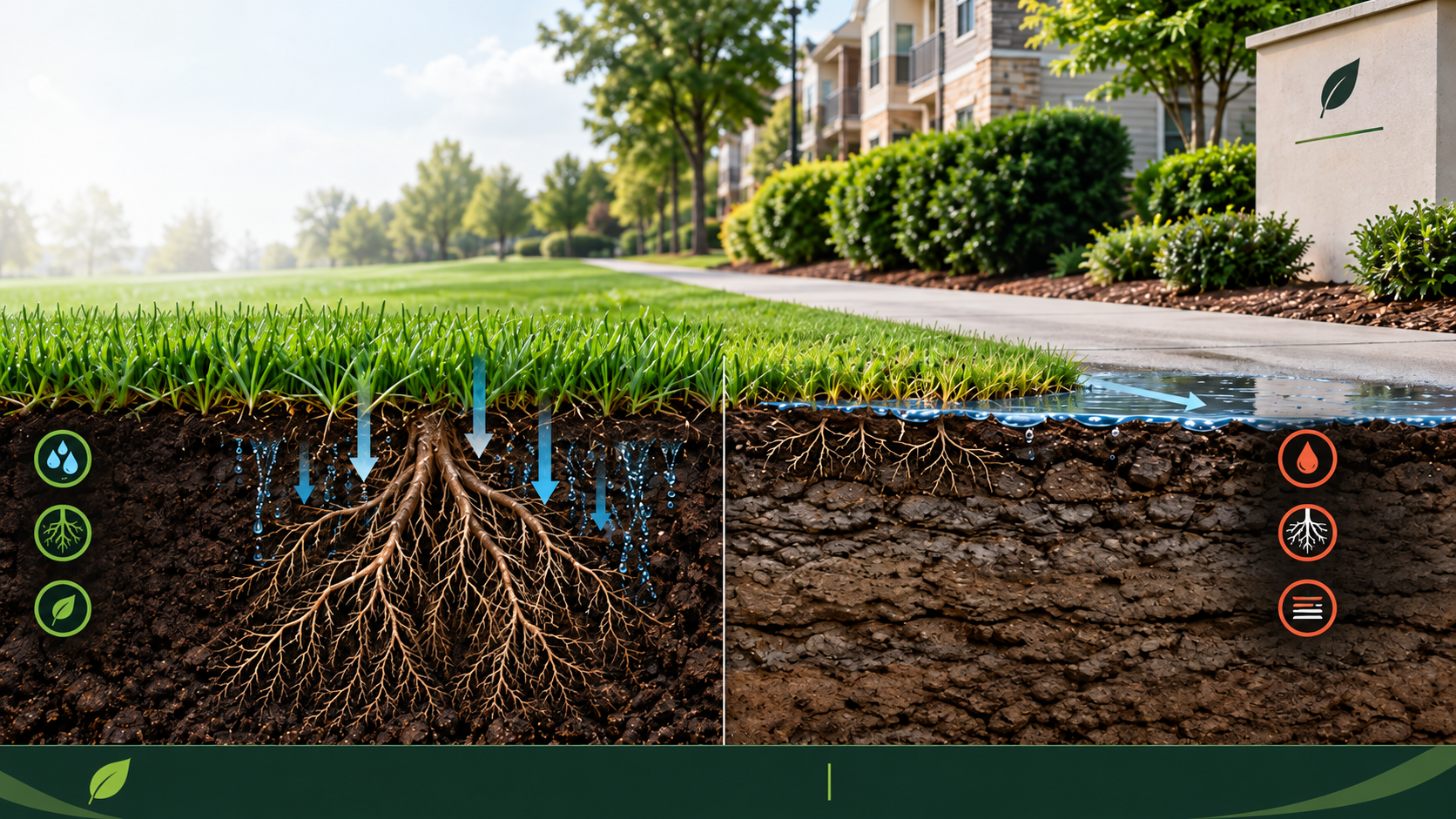
When turf struggles, shrubs decline, or water begins pooling in unexpected places, the first assumption is often that something is wrong with the irrigation system.
Sometimes, however, the problem is underneath the landscape.
Compacted soil is one of the most overlooked causes of declining landscape performance on commercial properties, HOAs, and multifamily communities. And because the symptoms can look like irrigation problems, drought stress, drainage issues, or poor plant health, the underlying cause can go unnoticed for years.
What Is Soil Compaction?
Healthy soil contains small spaces that allow water, oxygen, and plant roots to move through it.
Over time, those spaces can become compressed.
Heavy equipment, construction activity, vehicle traffic, repeated foot traffic, mowing equipment, and even years of normal landscape use can gradually compact the soil.
In newer developments, the problem may begin before landscaping is ever installed. Construction equipment repeatedly traveling over the site can leave extremely dense soil beneath newly installed turf and landscape beds.
Grass may look great when it is first installed, but problems begin appearing as roots attempt to establish.
Why Compacted Soil Creates Irrigation Problems
One of the biggest consequences of compaction is reduced water infiltration.
Instead of soaking into the soil where roots can use it, irrigation water may begin running across the surface.
That can create several confusing symptoms:
- Water pooling in low areas
- Runoff onto sidewalks or pavement
- Turf that remains dry despite regular irrigation
- Areas that appear overwatered next to areas that appear drought-stressed
- Increased irrigation run times without noticeable improvement
Increasing watering time does not necessarily solve the problem.
In fact, watering compacted soil longer can sometimes create more runoff without delivering significantly more water to the root zone.
That means a property may use more water while the landscape continues to struggle.
Compaction Can Also Weaken Turf
Grass roots need oxygen as well as water.
When soil becomes heavily compacted, roots often remain shallow because they cannot easily penetrate deeper into the soil.
Shallow-rooted turf is more vulnerable to:
- Heat stress
- Drought
- Heavy traffic
- Disease
- Winter damage
- Irrigation interruptions
This is one reason two sections of turf receiving similar irrigation can perform very differently.
The issue may not be the amount of water being applied. It may be the soil’s ability to accept that water and support healthy root development.
Trees and Shrubs Aren’t Immune
Compaction isn’t just a turf problem.
Trees and shrubs can also struggle when oxygen and water cannot move properly through the soil surrounding their roots.
Over time, this can contribute to slower growth, thinning canopies, declining plant material, and increased susceptibility to environmental stress.
Replacing plants without addressing the underlying soil conditions can create an expensive cycle:
Remove plant. Replace plant. Watch replacement struggle. Replace it again.
Before repeatedly replacing plant material in the same location, it is worth investigating why that location continues to fail.
Why Commercial Properties Are Especially Vulnerable
HOAs, apartment communities, schools, office complexes, and other commercial landscapes experience significantly more activity than many residential landscapes.
Maintenance crews, snow equipment, delivery vehicles, construction projects, utility repairs, residents, pets, and contractors can all contribute to soil compression.
Even small areas can become chronic trouble spots.
Common examples include turf near sidewalks, mailbox areas, pet stations, building entrances, playgrounds, sports areas, and narrow turf sections frequently crossed by pedestrians.
Those areas may require a different management strategy than the rest of the property.
What Can Be Done?
The solution depends on the severity of the compaction and the type of landscape involved.
For turf areas, core aeration can help relieve surface compaction and create openings that allow air, water, and nutrients to reach the root zone.
More severe conditions may require additional remediation, such as soil amendments, topdressing, renovation, or changes to the landscape itself.
In areas where heavy traffic continually recreates the problem, the long-term answer may not be more turf.
Converting repeatedly damaged turf into a more appropriate landscape treatment can sometimes reduce water consumption, maintenance costs, and recurring repairs.
Look Below the Surface Before Spending More Money
Commercial landscape problems are rarely solved by treating symptoms alone.
If an area repeatedly experiences poor turf performance, plant loss, runoff, or unusual watering requirements, simply increasing irrigation or replacing plant material may not address the actual issue.
A good landscape management strategy asks a different question:
Why does this area keep failing?
Sometimes the answer is visible above ground.
Sometimes it is six inches below it.
At Elevate Landscapes, we help commercial properties, HOAs, and multifamily communities evaluate landscape conditions as a complete system—from irrigation and plant health to drainage, soil conditions, and long-term landscape performance.
Before spending another season treating the same problem, it may be time to find out what is happening underneath it.
