
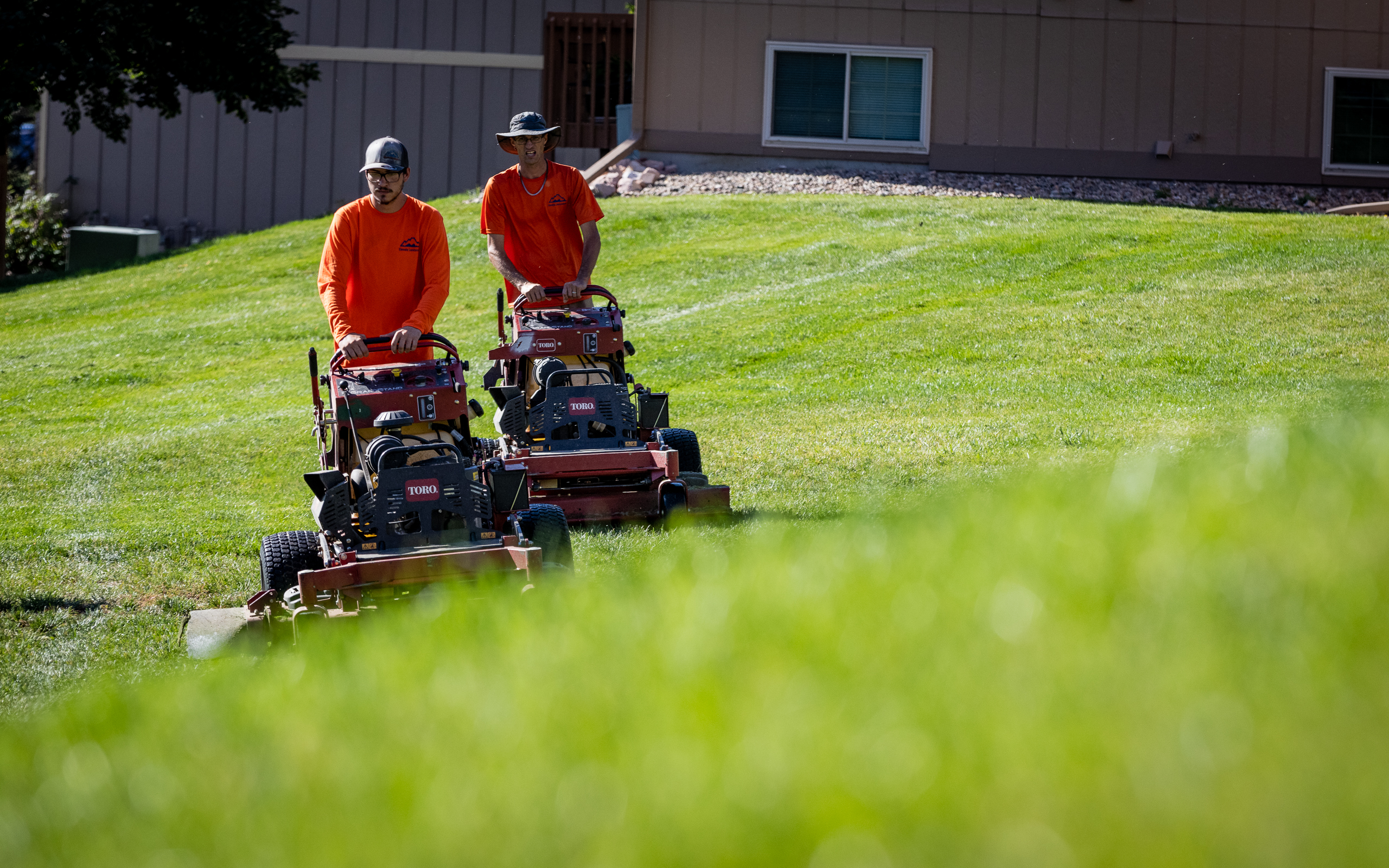
Landscape Maintenance That Actually Works: A Practical Guide for Property Managers and HOAs
If you manage a commercial property, apartment community, or HOA, you already know the truth: landscaping isn’t “set it and forget it.” It’s a living system. When it’s maintained correctly, it boosts curb appeal, tenant satisfaction, safety, and long-term asset value. When it’s maintained poorly, it quietly turns into dead turf, dying shrubs, irrigation failures, liability risks, and expensive replacements.
Here’s a straightforward guide to landscape maintenance that protects your property—not just its appearance.
What “Landscape Maintenance” Really Includes
A good maintenance program is more than mowing and blowing. It should be built around four pillars:
1) Turf and Grounds Care (The Visible Stuff)
-
Mowing at proper height and frequency (not “scalping”)
-
Trimming, edging, and detail work around hardscape
-
Weed management in turf, beds, cracks, and rock areas
-
Debris cleanup (wind, litter, pet waste hotspots)
-
Seasonal adjustments (growth slows, then surges)
Why it matters: Consistent grounds care prevents turf stress and weed takeover—both expensive to correct later.
2) Plant Health Care (The Asset Protection Stuff)
-
Shrub pruning for plant structure (not just “shearing into boxes”)
-
Tree canopy lifts for visibility and pedestrian safety
-
Pest/disease monitoring (before it spreads)
-
Fertilization that supports roots and color without burning plants
-
Mulch refresh and bed conditioning
Why it matters: Replacing shrubs and trees is far more expensive than maintaining them correctly.
3) Irrigation Checks (The Most Common Missing Piece)
This is the #1 reason properties decline even when mowing looks “fine.”
A strong maintenance plan should include:
-
Regular zone runs and head checks
-
Broken head and leak identification
-
Coverage correction (dry spots and overspray)
-
Controller programming changes by season
-
Basic repairs and reporting (so issues don’t sit for months)
Why it matters: “Cheap” maintenance usually skips irrigation oversight—then the property pays later in dead turf, flooded sidewalks, and water waste.
4) Seasonal Services (Where Properties Win or Lose the Year)
-
Spring cleanups (cutbacks, bed reset, winter debris removal)
-
Aeration and overseeding (as needed)
-
Summer heat mitigation and water management
-
Fall leaf services (and preventing turf suffocation)
-
Winter safety awareness (snow storage areas, salt impacts, ice-prone zones)
Why it matters: Seasonal transitions are where neglected properties fall behind—and where well-managed properties stand out.
Why Two “Similar” Maintenance Bids Can Be Thousands Apart
If you’ve ever compared proposals and wondered why pricing varies so much, it usually comes down to:
-
Labor hours per visit (how many people, how long, how detailed)
-
Service frequency (weekly vs. every-other-week, seasonal adjustments)
-
Irrigation oversight (included, limited, or not included at all)
-
Quality control and reporting (photos, site walks, proactive notes)
-
Scope clarity (what’s included vs. what becomes “extra” later)
A lower price often means fewer labor hours and less oversight. That can work for low-demand sites—but for most commercial properties, it creates a “deferred maintenance bill” that shows up later in replacements, complaints, and emergencies.
The Property Manager’s Checklist: Signs Your Maintenance Is Falling Short
If any of these are happening, your maintenance program likely needs attention:
-
Brown or thinning turf despite irrigation running
-
Overspray onto sidewalks, cars, or buildings
-
Weeds taking over beds and rock areas
-
Shrubs hacked back unevenly or constantly “boxed”
-
Bare mulch beds, exposed fabric, or visible irrigation lines
-
Dead plants being ignored until they’re obviously gone
-
Drainage swales filling with sediment, trash, or weeds
-
“No one knows” when irrigation was last checked
How to Get Better Results Without Blowing the Budget
You don’t always need a full scope overhaul. A few smart moves can dramatically improve outcomes:
-
Require a maintenance report cadence (even a short monthly update)
-
Include irrigation checks (or add a dedicated irrigation walk)
-
Do one strong seasonal reset (spring cleanup sets the tone)
-
Prioritize high-visibility areas (entries, monument signs, leasing office)
-
Treat enhancements as planned capital (instead of emergency spending)
The Bottom Line
Landscape maintenance isn’t just a “line item.” It’s a property performance lever. The right program keeps your site healthy, attractive, and safe—while controlling long-term costs.
If you want to evaluate your current scope or compare a proposal apples-to-apples, the key is simple: look for labor allocation, irrigation oversight, seasonal strategy, and quality control. That’s where results come from.
